


Rideshare trips are woven into daily life in Atlanta, from Hartsfield-Jackson pickups to late nights in Midtown, yet clear Atlanta rideshare accident data is surprisingly hard to find. No official system counts it, so the real picture has to be assembled from national research, federal crash totals, and Georgia’s own reporting. Where the data has gaps, they are marked here rather than filled with estimates.
Every figure on this page is drawn from a published source and linked to it. Figures that could not be traced to a primary source were left out.
- Neither Georgia nor the rideshare companies publish crash data broken out for Atlanta specifically, so local figures must be pieced together from broader sources.
- Research from the University of Chicago and Rice University linked the arrival of ridesharing to about a 3 percent annual increase in traffic fatalities, roughly 987 additional deaths each year.
- Georgia recorded 373,135 police-reported crashes in 2023, with 8,171 suspected serious injuries and 1,615 traffic deaths.
- The 11-county Atlanta region accounted for 523 traffic deaths in 2023.
- Uber’s most recent published US Safety Report covers 2019 and 2020 and contains no city-level breakdown.
- Rideshare crash claims can involve different insurance policies depending on whether the driver was waiting for, traveling to, or completing a trip.
Call Us Now for a Free Consultation!
How Common Are Rideshare Crashes?
No one tracks the exact number of rideshare crashes in the United States, but research points to a real safety cost. A study by John Barrios of the University of Chicago Booth School of Business with Yael Hochberg and Hanyi Yi of Rice University found that app-based driving services account for “about a 3 percent annual increase in traffic-related fatalities,” or roughly 987 people each year. The researchers measured how crash rates changed as ridesharing rolled out across U.S. cities.
For the national context, the National Highway Traffic Safety Administration estimated 39,345 traffic deaths in 2024, a decrease of about 3.8 percent from the 40,901 reported in 2023. That works out to roughly 108 deaths on U.S. roads each day. Not every study agrees on the size of the rideshare effect, but most point in the same direction: more cars and more miles mean more crashes, the same trend our Atlanta car accident attorneys see across ordinary collision claims.
Atlanta and Georgia Crash Numbers
 While rideshare-specific figures are scarce, Georgia’s overall crash data is well documented. The Georgia Governor’s Office of Highway Safety counted 373,135 police-reported crashes statewide in its most recent published overview of motor vehicle crashes, covering 2023. These totals cover all vehicles, including the Uber and Lyft cars mixed into daily traffic.
That same report breaks Georgia into regions rather than individual counties. Here is what it shows for the state and for the Atlanta region:
- Statewide: 373,135 police-reported crashes in 2023
- Statewide: 8,171 suspected serious crash injuries
- Statewide: 1,615 motor vehicle traffic fatalities
- Atlanta region, 11 counties: 523 traffic fatalities
- The Atlanta region covers Cherokee, Clayton, Cobb, DeKalb, Douglas, Fayette, Forsyth, Fulton, Gwinnett, Henry, and Rockdale counties
Federal state safety data tracks Georgia’s fatality rate against annual targets. Rideshare vehicles travel these same roads, so metro Atlanta’s crash-heavy corridors are also where rideshare wrecks are most likely to happen.
Why Is Atlanta Rideshare Data So Hard to Find?
Atlanta rideshare data is hard to find because no official system counts it. Georgia’s crash reports record vehicles, drivers, and causes, but they do not flag whether a car was working as an Uber or Lyft at the time. As a result, a rideshare crash usually looks like any other car crash in the public data.
The companies fill only part of the gap. Uber and Lyft publish national safety reports every few years, and those focus mainly on fatalities and serious safety incidents rather than routine collisions.
City-level breakdowns for places like Atlanta are not included, which is why an honest local picture has to combine national rideshare research with Georgia’s general crash numbers.
What Do Uber and Lyft’s Safety Reports Show?
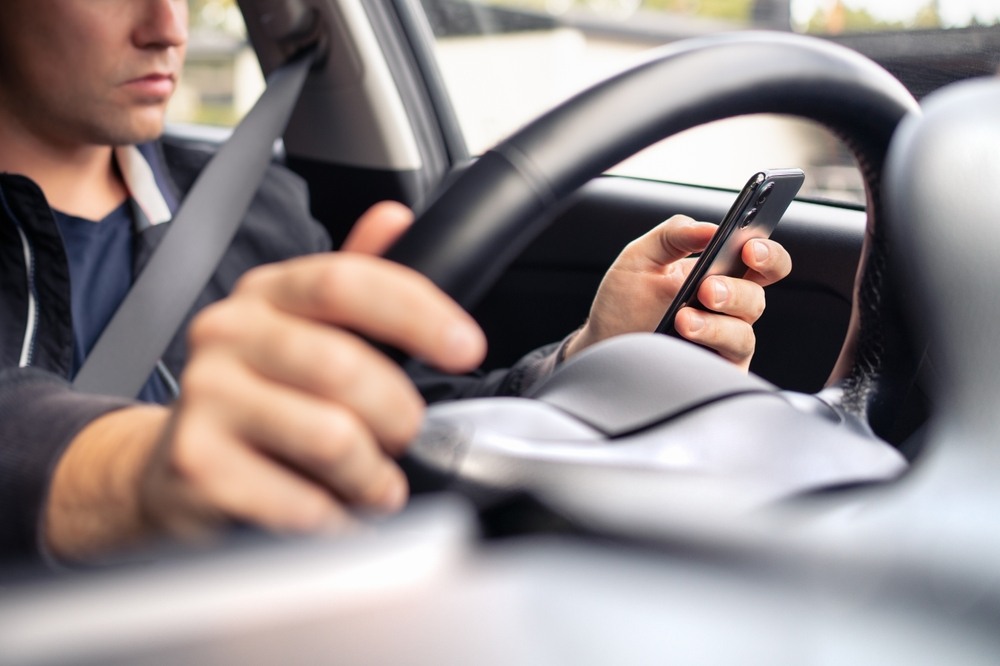 Uber and Lyft’s own safety reports offer the clearest company-level data, with real limits. Uber’s most recent published US Safety Report covers 2019 and 2020, so the newest company figures available are already several years old. That gap is part of why rideshare safety is hard to measure at all.
In that report, Uber stated that its motor vehicle fatality rate is “still half the national average,” and that “more than half of the motor vehicle fatalities highlighted in this report include at least one risky behavior.” These are self-reported figures, so they should be read with care.
Uber does not publish a city-level fatality count, and neither company reports routine crash or injury totals for Atlanta. Any figure claiming to isolate Atlanta rideshare crashes is an estimate, not a measurement.
Factors Behind Atlanta Rideshare Crashes
The same behaviors that drive most crashes also drive rideshare wrecks, often magnified by city traffic. Uber’s report found that more than half of its motor vehicle fatalities involved at least one risky behavior. Speeding and impaired driving show up again and again.
Atlanta adds its own pressures. Heavy congestion on I-285 and the Downtown Connector, frequent stops for pickups and drop-offs, and late-night trips around nightlife districts all raise the odds of a collision.
Distraction is another factor, since rideshare driving depends on constant app use for navigation and ride requests. Speeding contributes to roughly a third of traffic deaths in NHTSA data, and more than 300,000 people a year are hurt in crashes involving distracted drivers.
Why Rideshare Claims Are More Complex Than Typical Crashes
Beyond the numbers, rideshare crashes raise questions that a normal car wreck does not. Coverage often depends on what the driver was doing at the moment of the crash, such as waiting for a request, driving to a pickup, or carrying a passenger. Each phase can trigger a different insurance policy, which makes these claims harder to sort out.
The phase also determines which insurer investigates and which adjuster you deal with, so identifying it early shapes the claim. Crash reports rarely record it, which is why the app trip record matters.
Tracing that coverage is the first real task for any Atlanta rideshare accident lawyer handling one of these claims. For more than four decades, McArthur Law Firm has stood up for injured Georgians, with recoveries topping $450 million, and we handle rideshare claims throughout metro Atlanta from our Fulton County office.
Results may vary. Prior case outcomes do not guarantee similar results.
Kathy McArthur, who founded the firm, holds board certification in Civil Trial Law from the National Board of Trial Advocacy. If an Uber or Lyft crash left you hurt, matching the data to the right coverage is the first move toward a fair claim.
Call Us Now for a Free Consultation!
FAQs: Uber and Lyft Crash Statistics in Georgia
The numbers raise a few natural questions, and here is how we answer them.
Are Uber and Lyft drivers safer than other drivers?
The data is thin, and what exists is self-reported. Uber has said its motor vehicle fatality rate is about half the national average, but rideshare drivers log far more miles than typical motorists, which raises their total crash exposure. A lower rate per mile does not necessarily mean lower risk over a full shift.
Whose insurance pays after an Uber or Lyft crash in Georgia?
It depends on what the driver was doing at the time. When the app is off, the driver’s personal policy applies; while they wait for a ride, a limited company policy applies; and once they are en route or carrying a passenger, more extensive coverage usually kicks in. Sorting out the right policy is often the hardest part of these claims.
What should I do after a rideshare crash in Atlanta?
Get medical care, call 911 so there is a police report, and take photos of the scene and vehicles. Report the crash in the Uber or Lyft app, gather the driver’s information, and request the official report through the Georgia Department of Public Safety. Then speak with a lawyer before giving any recorded statement to an insurer.
Can a rideshare passenger be blamed for a crash?
Passengers are rarely at fault, which often makes their claims more straightforward. Fault usually falls on one of the drivers involved, and a passenger may have more than one source of recovery. Being a passenger does not reduce your right to seek compensation.
Where does official rideshare crash data come from?
The most reliable public sources are the National Highway Traffic Safety Administration for national crash totals, Georgia’s Governor’s Office of Highway Safety for state and regional numbers, and Uber and Lyft’s own safety reports for company data. None of them isolates Atlanta rideshare crashes, so any local estimate blends these sources.
Injured in an Atlanta Uber or Lyft Crash?

Founding Partner
If a rideshare crash left you hurt, the data on this page is only a starting point, because your claim turns on its own facts and the coverage in play. Our attorneys can trace the right insurance and stand up for what you are owed. Call McArthur Law Firm in Atlanta at 404-565-1621.
Call Us Now for a Free Consultation!
McArthur Law Firm – Atlanta Office
55 Ivan Allen Jr Blvd NW, Suite 840
Atlanta, GA 30308
Phone: 404-565-1621