


Quick Answer: What Is Georgia’s Super Speeder Law?
Under O.C.G.A. § 40-6-189, a driver convicted of going 85 mph or more on any Georgia road, or 75 mph or more on a two-lane road, is classified as a super speeder and owes a $200 state fee on top of the local fine. Unpaid fees lead to license suspension, and the speeding behind a super speeder conviction can be strong evidence of negligence in an injury claim.
Georgia’s Super Speeder Law imposes additional penalties on drivers convicted of traveling at dangerously high speeds. But when excessive speeding causes a serious accident, the consequences can extend far beyond a traffic ticket.
For someone injured in a high-speed crash, the driver’s speed may help explain why the collision happened, whether it could have been avoided, and why the resulting injuries were so severe.
Evidence of extreme speeding can also help establish negligence and support a claim for compensation.
If you or a family member was injured by a speeding driver, a Georgia car accident attorney can investigate the crash, determine how speed contributed to your injuries, and help you understand your legal options.
Call Us Now for a Free Consultation!
Key Takeaways About Georgia’s Super Speeder Law
- A super speeder is a driver convicted of driving 85 mph or more on any road, or 75 mph or more on a two-lane road.
- The state fee is $200, separate from and in addition to the local fine and court costs.
- The Department of Driver Services, not the court, bills and collects the fee by mail.
- Failing to pay on time leads to license suspension and an added $50 reinstatement fee.
- Extreme speeding can support a negligence claim and, in some cases, a claim for punitive damages.
Who Counts as a Super Speeder in Georgia?
Georgia classifies a driver as a super speeder after a conviction for driving at 85 mph or more on any road or highway, or at 75 mph or more on a two-lane road or highway. The classification depends on the speed itself, not on how far over the posted limit the driver was going.
| Road and Posted Limit | Speed | Super Speeder? |
|---|---|---|
| Two-lane highway, 55 mph | 76 mph | Yes, 75 mph or more on a two-lane road |
| Two-lane road, 45 mph | 70 mph | No, under 75 mph |
| Interstate, 70 mph | 84 mph | No, under 85 mph |
| Interstate, 70 mph | 85 mph | Yes, 85 mph or more on any road |
A driver who falls below these thresholds can still receive an ordinary speeding ticket and points, but not the super speeder fee.
What Counts as a Two-Lane Road?
For the super speeder law, a two-lane road generally means a road with one lane of through traffic in each direction. Turn lanes, parking lanes, and shoulders do not change that classification. Many of Georgia’s rural state routes and county highways fall into this category.
What Are the Fines and Penalties for Super Speeding in Georgia?
The super speeder fee is not part of the ticket. After a conviction, the court reports it to the Georgia Department of Driver Services, which mails the driver a notice of the $200 fee. Many drivers are surprised by it because the officer and the court may never mention it.
The Payment Deadline
The Department of Driver Services states that failing to pay the fee within 120 days of the notice date results in suspension of the driver’s license or driving privileges.
Reinstatement then requires the $200 fee plus a $50 reinstatement fee. A driver with more than one super speeder conviction owes a separate fee for each one.
Points on a Georgia License
The super speeder fee does not add points by itself. The underlying speeding conviction can add points, but Georgia does not assess points for speeding less than 15 mph over the posted limit.
Georgia assigns points based on how far over the limit the driver was traveling, with more points for higher speeds. Accumulating too many points within two years can lead to a separate suspension.
Out-of-State Drivers and Commercial Drivers
Drivers licensed in other states are not exempt. If a nonresident does not pay, Georgia can suspend that driver’s privilege to drive in the state.
Commercial drivers face additional consequences, because federal rules treat speeding 15 mph or more over the limit as a serious traffic violation that can lead to disqualification from driving a commercial vehicle after repeated offenses.
How Does Speeding Affect a Georgia Injury Claim?
A driver’s speed can help establish how a crash happened and whether the driver could have avoided it.
Higher speeds reduce the time a driver has to react, lengthen stopping distances, and increase the force of an impact, which usually means more serious injuries. When the at-fault driver was traveling at super speeder levels, those facts often shape the entire claim.
Speeding as Evidence of Negligence
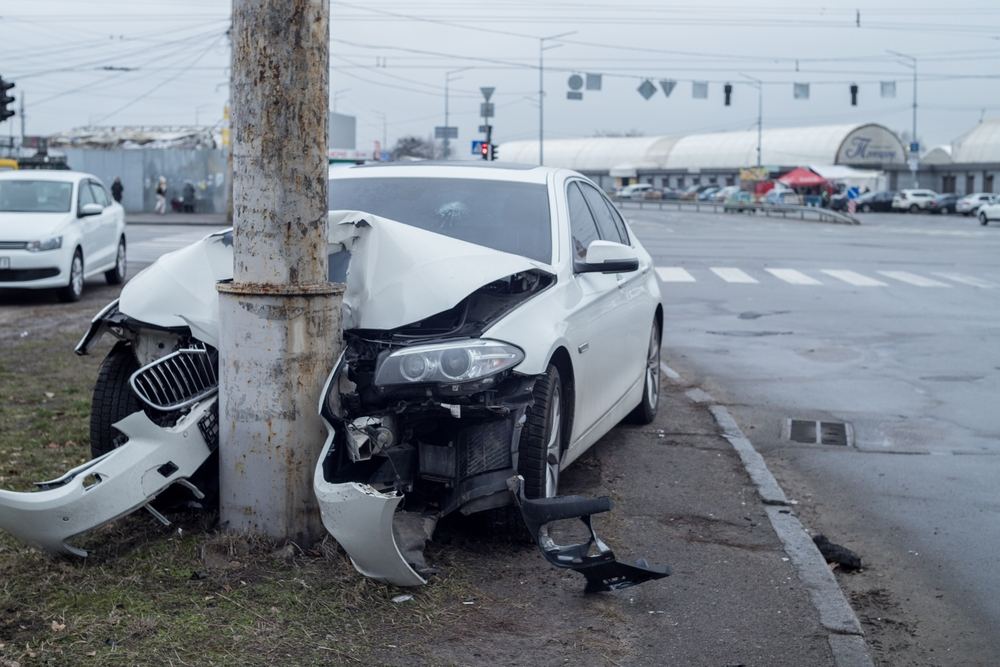 Georgia law requires drivers to travel at a speed that is reasonable for conditions and within posted limits. A driver who violates a traffic safety statute may be found negligent as a matter of law, a principle called negligence per se, as long as the violation caused the harm.
Proof that a driver was going 85 or 90 mph can therefore establish fault more directly than witness opinions about who was driving carelessly.
Can a Super Speeder Conviction Be Used in Court?
How a speeding citation was resolved affects whether it can be used in a later civil case. In general, a guilty plea to a traffic charge can be offered as an admission, while a plea of nolo contendere usually cannot.
Even when the citation itself is not admissible, the underlying evidence of speed, such as radar readings, vehicle data, and reconstruction, often is.
How Do You Prove Fault in a Georgia Speeding Accident?
Proving how fast a driver was traveling can help establish why a crash occurred, whether the driver could have avoided it, and who bears responsibility for the resulting injuries.
Proving How Fast the Other Driver Was Going
Police do not always have radar readings to confirm a driver’s speed. Attorneys may need to reconstruct the crash using vehicle data, video footage, and physical evidence.
These sources are commonly used:
- Event data recorders, which store vehicle speed and braking in the seconds before a crash
- Dash camera, traffic camera, and nearby business video
- Crash reconstruction based on skid marks, vehicle damage, and final rest positions
- Witness accounts from other drivers who were passed
- Telematics and app data, including commercial fleet tracking
Vehicle data can be lost when a car is repaired or salvaged, so preservation requests should go out early.
Can Extreme Speeding Support Punitive Damages?
Punitive damages in Georgia require clear and convincing evidence that the defendant acted with willful misconduct, wantonness, or conscious indifference to consequences under O.C.G.A. § 51-12-5.1. Ordinary speeding usually does not meet that standard.
Extreme speed combined with other aggravating facts, such as racing, weaving through traffic, impairment, or a history of similar violations, can sometimes support a punitive damages claim.
Punitive damages are generally capped at $250,000. That cap does not apply to an at-fault driver whose judgment was substantially impaired by alcohol or qualifying drugs, but this exception excludes lawfully prescribed drugs taken as directed.
What If You Were Speeding Too?
Speed cuts both ways. If an injured driver was also speeding, the defense will argue that the injured driver shares responsibility.
Under Georgia’s modified comparative negligence rule, O.C.G.A. § 51-12-33, a person less than 50% at fault can still recover damages, reduced by their percentage of fault, while a person 50% or more at fault cannot.
Seat Belts and Speed Arguments
Under Georgia’s updated law, evidence that an injured person was not wearing a seat belt may be considered when deciding fault, injury causation, and damages, subject to the court’s evidentiary rulings. Older claims may be governed by the prior rule.
In high-speed crashes, the focus is typically on how the drivers’ actions contributed to the collision and the resulting injuries.
Who Pays for Injuries After a High-Speed Crash in Georgia?
After a high-speed crash, identifying the responsible driver is only part of the process. Depending on the circumstances, a trucking company or another party may share liability, and multiple insurance policies may help cover the injured person’s losses.
Super Speeder Truck Drivers
A trucking company may share responsibility when its policies or practices contribute to dangerous speeding. Investigators may examine delivery demands, fleet tracking records, and the company’s response to previous speeding violations to determine whether it ignored warning signs.
When a commercial truck driver causes a high-speed crash, investigators must examine both the driver’s actions and whether the trucking company failed to address unsafe driving practices.
Where Extreme Speeding Crashes Happen in Georgia
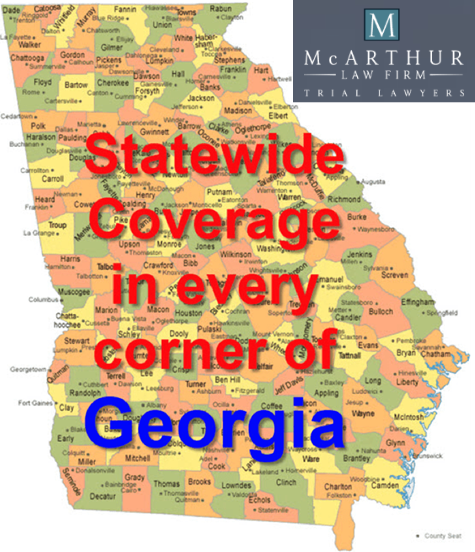 Extreme speeding crashes happen on many kinds of Georgia roads. Rural two-lane state routes invite high speeds on long straight stretches, while interstates such as I-75, I-85, and I-16 see late-night speeding when traffic thins out.
Head-on and run-off-road crashes are especially common on two-lane highways, where a speeding driver has little room to recover from a mistake.
Rural two-lane roads also carry a seasonal wildlife risk, and our guide on what happens when you hit a deer in Georgia explains who pays for the damage.
Injuries in High-Speed Crashes
Crashes at super speeder levels commonly cause traumatic brain injuries, spinal injuries, internal bleeding, multiple fractures, and fatal injuries.
These injuries often require surgery, long rehabilitation, and time away from work, so a complete claim accounts for future care and lost earning capacity, not just the first hospital bills.
Insurance Coverage When a Speeding Driver Hits You
Speeding does not automatically prevent an injured person from recovering compensation through the at-fault driver’s liability insurance.
When the speeding driver carries only Georgia’s minimum liability limits of $25,000 per person, your own uninsured and underinsured motorist coverage can make a significant difference, and Georgia policies generally add that coverage on top of the at-fault driver’s limits unless you chose otherwise in writing.
What Happens After a Crash Involving a Super Speeder?
Extreme speeding often leads to a criminal case alongside the injury claim, and the steps taken right after the crash protect the evidence for both.
Criminal Charges and Your Civil Claim
 Extreme speeding often comes with more than a speeding ticket. Depending on the facts, a driver may also face charges such as reckless driving, racing, or serious injury by vehicle when someone is badly hurt.
The criminal case and the civil claim are separate. A driver can be acquitted of a traffic charge and still be found responsible in a civil case, which uses a lower standard of proof.
Georgia law can also pause a crime victim’s civil filing deadline while a related prosecution is pending, up to a maximum of six years, although most injured people are better served by acting within the standard two years.
What to Do After a Crash With a Speeding Driver
Get medical care right away, photograph the vehicles and the scene, and write down the names of witnesses who saw the other car’s speed.
Ask the responding officer for the report number, avoid giving a recorded statement to the other driver’s insurer, and keep your own vehicle available for inspection so its data can be preserved.
If the other driver was cited, note the citation details from the crash report and keep track of the traffic case. How that case resolves, whether by guilty plea, conviction after trial, or a plea of nolo contendere, can affect what evidence is available in the civil claim.
Call Us Now for a Free Consultation!
FAQs About Georgia’s Super Speeder Law
How much is the Georgia super speeder fine?
The Georgia super speeder fee is $200, charged by the Department of Driver Services in addition to the local speeding fine and court costs. A $50 reinstatement fee is added if the license is suspended for nonpayment.
Is 75 mph on a two-lane road a super speeder offense?
Driving 75 mph or more on a two-lane road in Georgia qualifies as super speeding after a conviction. On other roads, the threshold is 85 mph.
Does the super speeder fee add points to my license?
The super speeder fee does not add points by itself, but the speeding conviction behind it does. The number of points depends on how far over the limit the driver was going.
Can I sue a super speeder who hit me?
You can bring a Georgia injury claim against a speeding driver who caused your crash, and extreme speed is often strong evidence of fault. Most claims must be filed within two years of the crash.
Does speeding automatically mean the other driver is at fault?
Speeding does not automatically decide fault in a Georgia crash case, because the speed must have contributed to the collision. A jury considers all of the drivers’ conduct before assigning percentages of fault.
Hold a Negligent Driver Accountable After a High-Speed Crash

Founding Partner
A driver who was traveling at extreme speeds may face a $200 super speeder fee, but that penalty does little to address the harm caused by a serious crash.
For injured people and their families, the greater concern is recovering compensation for medical care, lost income, and injuries that may affect their lives for years.
At McArthur Law Firm, we investigate high-speed crashes, preserve evidence of dangerous driving, and pursue compensation for the injuries and losses our clients have suffered.
Founded by Katherine (Kathy) L. McArthur, our firm brings 44 years’ experience, $450M+ recovered, and 8 attorneys across 3 Georgia offices. Kathy is board-certified in truck accident law, bringing specialized experience to cases involving commercial trucks and serious injuries.
We offer free consultations and 24/7 availability. Call our Atlanta office at 404-565-1621 or our Macon office at 478-238-6600 for a free consultation.
Call Us Now for a Free Consultation!
McArthur Law Firm – Macon Office
6055 Lakeside Commons Drive, Suite 400
Macon, GA 31210
Phone: 478-238-6600