


Quick Answer: Who Is Liable for an I-285 Truck Accident?
Liability for an I-285 truck accident can rest with the truck driver, the trucking company, and sometimes a cargo loader, maintenance provider, or another driver. Federal trucking rules, Georgia’s fault laws, and evidence such as engine data and driver logs determine who pays, and most injury claims must be filed within two years.
After a truck accident on I-285, you may know exactly how the collision happened from your perspective but have little idea what caused it. You might have seen the truck move into your lane or realized too late that it wasn’t going to stop.
What you couldn’t see was whether the driver was distracted, had been driving too long, or was operating a truck with a mechanical problem.
Those details can help establish liability when you’re facing serious injuries, mounting expenses, and time away from work.
Finding out who caused the crash often means investigating more than what happened on the road, including reviewing the trucking company’s records and the driver’s actions.
An Atlanta truck accident attorney can investigate the circumstances of your crash, identify potentially liable parties, and help you understand your options for seeking compensation.
Call Us Now for a Free Consultation!
Key Takeaways About I-285 Truck Crashes
- I-285 carries heavy truck traffic because it connects I-75, I-85, and I-20 and routes many through trucks around downtown Atlanta.
- Lane changes across closely spaced exits, sudden slowdowns, and blind spots cause many Perimeter truck crashes.
- The driver, the motor carrier, and other companies involved in the shipment may share liability.
- Federal rules require carriers to keep driver logs for only six months, so evidence should be preserved quickly.
- Most Georgia truck accident injury claims must be filed within two years.
Why Is I-285 One of Atlanta’s Busiest Truck Corridors?
I-285 is the beltway that ties metro Atlanta’s freight network together. Trucks moving goods between ports, distribution centers, and other states use it to reach I-75, I-85, and I-20 without passing through the Downtown Connector.
Georgia routes many through trucks, including trucks carrying hazardous materials, around the city on the Perimeter instead of through downtown, which concentrates heavy vehicles on the loop.
At the same time, I-285 is a primary commuter route for people traveling between suburbs and job centers like Perimeter Center, Cumberland, and the airport area. Freight and commuter traffic share the same lanes, often at highway speeds, with frequent entrances and exits.
The Major Interchanges
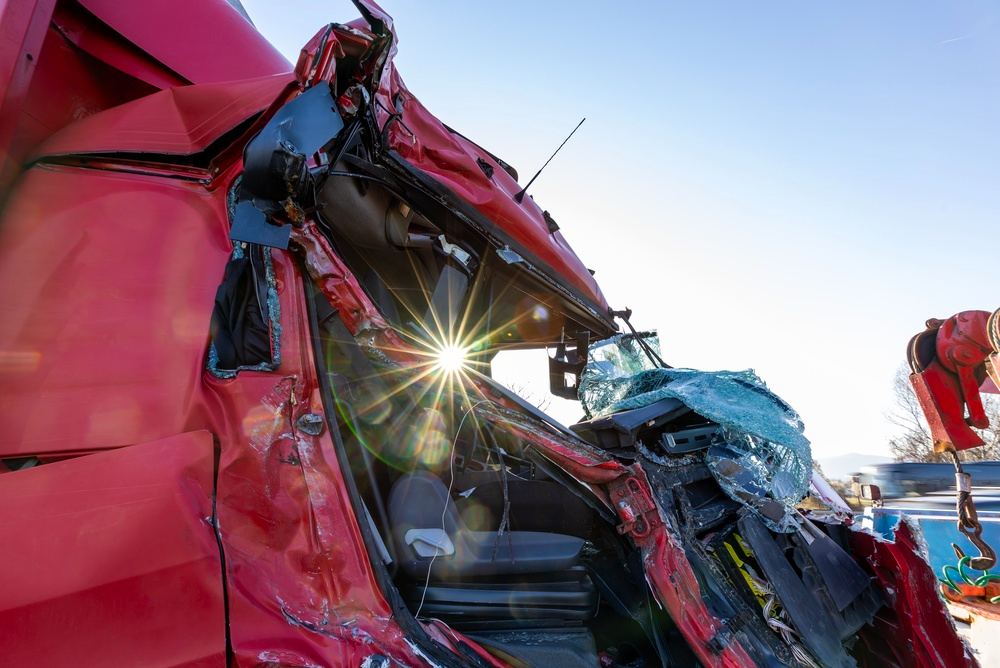 Several of the region’s most complex interchanges sit on the Perimeter. Spaghetti Junction, where I-285 meets I-85 in DeKalb County, and the I-75 interchange in Cobb County near Cumberland both funnel trucks and cars through multiple merging ramps.
The GA 400 interchange in Sandy Springs, the I-20 interchanges on the east and west sides, and the I-75 and I-85 connections on the south side near the airport add their own merge points.
What Are Some of the Common Causes of I-285 Truck Accidents?
Heavy traffic, frequent merging, and sudden slowdowns create conditions where even a brief mistake by a truck driver can cause a serious collision.
Weaving Between Closely Spaced Exits
Exits on I-285 are often close together, so drivers cross several lanes in a short distance to reach their ramp. A truck changing lanes in that space can strike a car in its blind spot, and a car cutting in front of a truck can leave the truck driver no room to stop.
Video and vehicle data are usually needed to sort out who moved first.
Sudden Slowdowns and Rear-End Crashes
Traffic on the Perimeter can drop from highway speed to a standstill with little warning, especially near major interchanges and during rush hour.
A loaded tractor-trailer needs far more distance to stop than a passenger car, so a truck driver who follows too closely or is distracted may not be able to avoid a rear-end crash.
Driver Fatigue and Hours-of-Service Violations
Drivers on long hauls often reach Atlanta late in a shift. Federal hours-of-service rules limit how long commercial drivers can drive and stay on duty, and electronic logging devices record that time. A driver who exceeded those limits may have been too fatigued to react safely.
Construction Zones and Weather
Ongoing construction on the Perimeter brings narrowed lanes, shifting traffic patterns, and reduced shoulders. Heavy rain also reduces visibility and traction.
Federal rules require commercial drivers to use extreme caution and reduce speed in hazardous conditions, so weather explains the setting of a crash but does not excuse a driver who failed to adjust.
Who Is Liable for an I-285 Truck Accident?
More than one party may share responsibility for a truck crash on I-285, and identifying all of them can affect how much insurance is available.
| Potential Defendant | Possible Basis for Liability |
|---|---|
| Truck driver | Unsafe lane changes, following too closely, speeding, distraction, fatigue, or impairment |
| Motor carrier | Responsibility for its driver, plus negligent hiring, training, supervision, or unrealistic schedules |
| Cargo loader or shipper | Overloaded or improperly secured freight that affected handling |
| Maintenance provider | Faulty brake, tire, or lighting work |
| Other drivers | Cutting off a truck or causing a chain-reaction crash |
Federal and Georgia trucking rules shape many of these claims, and our breakdown of Georgia trucking regulations explains how those rules work together.
Can You Sue the Trucking Company’s Insurer Directly?
Georgia allows a motor carrier’s insurer to be named as a defendant only in limited situations, such as when the carrier is insolvent or bankrupt, or when the driver or carrier cannot be served.
In most cases, the claim proceeds against the driver and carrier, and their insurer defends them and pays any settlement or judgment up to the policy limits.
Evidence That Matters After a Perimeter Truck Crash
Truck crash evidence can disappear quickly, and some of the most useful records belong to the trucking company. These are the sources that matter most:
- Engine control module data showing speed, braking, and throttle before the crash
- Electronic logging device records of the driver’s hours
- Dash camera footage from the truck and from other vehicles
- Maintenance and inspection records for the truck and trailer
- Witness statements and the crash report
Federal rules require carriers to keep hours-of-service records for only six months, and dash camera footage can be overwritten much sooner. Many highway traffic cameras show live conditions without storing footage, so other video sources often matter more.
A written preservation request to the carrier puts it on notice to keep this evidence.
Where an I-285 Truck Case Is Filed
 Because I-285 runs through four counties, the courthouse that hears a case depends on where the crash happened and where the defendants live or do business.
Cases are often filed in the State Court or Superior Court of Fulton, DeKalb, Cobb, or Clayton County. Georgia law can allow a lawsuit against an out-of-state driver or carrier in the county where the crash occurred.
Crashes in Construction Zones
When a construction zone’s design, signage, or traffic control contributed to a crash, a contractor or a government agency may share responsibility.
Claims against the state require written notice within 12 months under the Georgia Tort Claims Act, so these situations should be reviewed early.
Georgia Law and Your I-285 Truck Accident Claim
Most Georgia truck accident injury claims must be filed within two years under O.C.G.A. § 9-3-33. Under O.C.G.A. § 51-12-33, an injured person less than 50% at fault can recover damages reduced by their percentage of fault, and a person 50% or more at fault cannot recover.
Trucking defense teams often argue that the car driver cut in front of the truck, which makes early evidence important.
Under 49 C.F.R. § 387.9, interstate carriers hauling general freight generally must carry at least $750,000 in liability coverage, and many carry more. Damages can include past and future medical care, lost wages and earning capacity, and physical and emotional pain.
When a crash is fatal, Georgia law allows the family to seek the full value of the life lost. More detail on Perimeter crashes is available on our I-285 accidents page.
What Types of Truck Accidents Happen on I-285?
I-285’s heavy traffic, closely spaced exits, and complex interchanges create conditions for several types of serious truck accidents. Some of the most common include:
- Underride crashes: When traffic stops suddenly, a smaller vehicle can slide beneath the rear of a trailer, causing severe injuries. Missing or defective rear impact guards may contribute to the severity of these crashes.
- Jackknife and rollover accidents: Curved ramps near Spaghetti Junction and the I-75 interchange require careful speed control. Trucks can jackknife or overturn when drivers take curves too fast, brake abruptly, or lose control of shifting cargo.
- Sideswipe and blind-spot collisions: Large blind spots make lane changes especially dangerous. A truck driver who fails to check for nearby vehicles may sideswipe a car or force it into another lane or barrier.
- Hazardous materials accidents: Trucks carrying fuel, chemicals, or other hazardous cargo can cause spills, fires, and exposure injuries. These crashes may involve additional safety regulations, insurance requirements, and potentially liable parties.
Each type of collision raises different questions about driver negligence, vehicle maintenance, and trucking company responsibility. Identifying how the crash occurred helps determine what evidence is needed to establish liability.
Injuries, Next Steps, and How Long an I-285 Case Takes
 Truck crashes on the Perimeter often cause serious injuries, and the steps taken in the first days shape how the claim unfolds and how long it takes to resolve.
What to Do After a Truck Crash on I-285
If you are able to, move to a safe location and call 911. Ask the responding officer for the report number, and photograph the vehicles, the truck’s company name and USDOT number, and the scene.
Get medical care promptly, even if your injuries seem minor, and avoid giving a recorded statement to the trucking company or its insurer until you understand your rights.
Injuries Common in Perimeter Truck Crashes
Truck crashes on the Perimeter commonly cause traumatic brain injuries, spinal cord injuries, multiple fractures, internal injuries, and fatalities. These injuries often require surgery, long rehabilitation, and time away from work, and some leave permanent limitations that affect a person’s career and family life for years.
How Long Does an I-285 Truck Case Take?
Many I-285 truck cases take one to two years to resolve, and cases with severe injuries, several vehicles, or disputes among multiple companies can take longer. Settling before the long-term effects of an injury are known can leave future costs uncovered, so timing should follow the medical picture.
Call Us Now for a Free Consultation!
FAQs About I-285 Truck Accidents
Who is liable for an I-285 truck accident?
The truck driver and the trucking company are often responsible for an I-285 truck accident, and a cargo loader, maintenance provider, or another driver may share fault. The evidence decides how responsibility is divided.
How long do I have to file an I-285 truck accident claim?
Most Georgia truck accident injury claims must be filed within two years of the crash. Claims involving a government agency may require written notice much sooner.
What if several vehicles were involved?
In a multi-vehicle I-285 crash, Georgia law allows a jury to divide fault among every driver and company that contributed. Each responsible party’s insurance may then contribute to the recovery.
Should I talk to the trucking company’s insurer?
You are not required to give a recorded statement to a trucking company’s insurer after an I-285 crash. Those statements are often used to build the carrier’s defense, so many injured people speak with an attorney first.
How much insurance do trucking companies carry?
Interstate carriers hauling general freight generally must carry at least $750,000 in liability coverage, with higher minimums for some hazardous materials. Many carry additional excess coverage.
Get Help After an I-285 Accident From an Atlanta Truck Accident Lawyer

Founding Partner
The evidence needed to establish who caused an I-285 truck accident is often in the trucking company’s hands. Driver logs, maintenance records, and electronic data can reveal what happened, but some records may be lost if they aren’t preserved quickly.
At McArthur Law Firm, our Atlanta truck accident lawyers investigate the cause of serious crashes, identify responsible parties, and build claims that reflect the full impact of our clients’ injuries.
With 44 years of experience and more than $450 million recovered, our firm is led by Kathy McArthur, one of fewer than 10 attorneys in Georgia board-certified in Truck Accident Law.
Call our Atlanta office at 404-565-1621 for a free consultation to discuss your legal options. Prior results do not predict future outcomes.
Call Us Now for a Free Consultation!
McArthur Law Firm – Atlanta Office
55 Ivan Allen Jr Blvd NW, Suite 840
Atlanta, GA 30308
Phone: 404-565-1621